27th
My decision to start a fund for Sean was a spontaneous one, done while I still had the covers over my head. When I did it though, I opened Pandora’s Box, as this was a very private part of Sean’s life. Why did I do it? I’m not really sure. Sometimes I think it was my ego. I wanted him to stay alive…he was too special for his family and the world to lose so soon. I wanted to use Sean’s gifts of celebrity and kindness to prevent such hurt from affecting anyone else in this world. It would be what Sean would do if he could. Ultimately, I wanted his life to have continued meaning.
The impact of revealing his challenges were an unknown to me, and could have resulted in comments that would be difficult for me to hear, or might negatively influence Sean’s reputation. I underestimated the guidance of my heart, or God or the Universe, whatever is the source of positive inspiration. What has emerged from this endeavor simply validates its inception. So many people have come forward to tell of their experience with Bipolar Disorder. Most of them are complete strangers, but you can hear the sadness in the telling of their own, or the struggles of someone they love or loved. Some of them are family members, who, if I had only known, could have had their history used the information to help Sean in his quest for solutions and diagnosis.
What is Bipolar Disorder?
Bipolar Disorder manifests itself differently in different people, and there are two distinct categories, one where the person is more obviously “manic” and the other, where the person is primarily depressive with hypo manic episodes. Given Sean’s temperament and choice of profession, it is not hard to imagine which category he fell into. The sad thing is that according to statistics, it takes an average of 10 years to accurately diagnose, and during that time, the person affected tries to feel better however they can. Antidepressants don’t work, and can often worsen the symptoms. If symptoms start during adolescence, it is difficult to discern whether the teen has normal teen angst or has a true mood disorder. During this gap, the family and the person affected ride a tumultuous roller coaster, all the while trying to find a way off.
To complicate the matter, there is a shortage of child psychiatrists according to the National Institute of Mental Health and not enough research being done to determine causes and evaluation for early detection. These two are inseparable, for the longer the symptoms, the greater the chance for self-medication, which only worsens outcomes.
One person who wrote of their own trials, called this a “silent illness.” There is no better description. People are not usually willing to admit that they don’t feel the same as everyone else, and the upswing of the disorder fools even the person who is affected. Families are not willing to expose their loved one’s mood swings, both to protect the affected and to avoid feeling different themselves. I cannot tell you how many people have come forward to tell me that they are exhausted from trying to help and support their child or husband, and there seems to be nowhere for them to turn. Add to this a public persona, and silence is common.
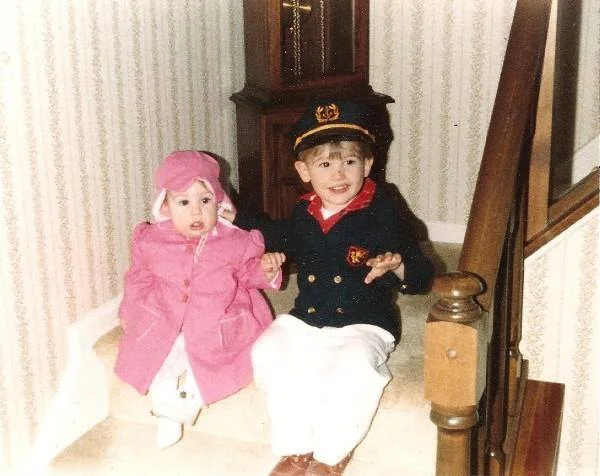
Sean is the perfect example of all of these things. As a child, Sean was the opposite of manic; he was down right mellow. He was a gifted student, but was quiet and reserved. It was his sense of humor that revealed his intelligence, and his ability to get into character. When he was in 3rd grade, he came home and told me he was trying out for a part in a play, and he was very excited. I asked him what the part was, and he said “I don’t know, but he says ‘I have a dream’.” He was very blonde and small at the time, so I told him not to be disappointed if he didn’t get the part. Well, he did, and to my surprise, brought the house down even when they took it to the local high school. Both his school and the high school were very racially mixed, and so the reception was very telling of things to come. In class, however, he rarely spoke up and had trouble looking someone in the eye, he was so shy. He did not misbehave. He was as sweet as can be, and, except for exceptionally bad handwriting was an A student. (Funny, this was diagnosed as poor motor coordination! The hand writing never improved, but the hand coordination certainly did.) Although there was no trace of any visible issues, as his Mother, I knew he was extremely sensitive and, at times, fragile and easily disheartened…the guitar got thrown down more than once.
Sean’s shyness continued until he found his guitar. This was his entree into the world of acceptance as a pre-teen, and he was seldom without it. It was a shield, a sort of costume that allowed him to feel like he belonged. Don’t get me wrong, kids loved Sean. He just didn’t know it. He was normal in every way: he teased his sister; never picked up his stuff; hated to do homework; had a ton of kids that would knock for him, etc. But, his sadness often came out only to me and when he wasn’t busy. It’s no surprise that he played the blues. He could look at someone and feel their pain. He was particularly protective of the plight of the African American and their suffering through slavery. Later, having become fluent in Spanish, I found out that he was taking kids who could only speak Spanish for job interviews. (In fact, at the cemetery, a Hispanic woman came to both me and his sister with a card with money in it. She said that Sean had been in school with her son, and she wanted to pay her respects…this was over 10 years later.) He once asked me: “Mom, why can’t I be something cool like Black or Hispanic?” I knew at that moment, that I would never be cool.
In high school, he was in Seventeen Magazine, won the Louis Armstrong Award and was voted best dressed. He had maintained an academic course load with AP classes, while missing about 30 days a year as he toured, mostly to Memphis I tried to get him to slow down, but he told me he had to play the guitar, and other classes were too boring. All of this time, he still struggled with social anxiety, another thing strongly linked to Bipolar Disorder.
You look at Sean and see handsome, talented, gifted, intelligent, generous and sweet. How could there ever be a problem? Well, there was. One he fought to overcome everyday. Lack of self-esteem, social awkwardness and sleep problems were something he lived with until the day he died. Imagine that force on stage in conflict with the awkwardness he felt. The discrepancy in conjunction with the touring, the late nights and the stress of managing a band for more than 12 years took their toll. Nonetheless, those of us who knew him knew he would never give up voluntarily. Never. He was a fighter and he loved too many. However, it is possible that, as his wonderful girlfriend said: “He didn’t leave us. His body left him.”
Sean was considered by many to be a musical prodigy, if not genius, a grouping who, along with artists, are stereotypically bipolar. The medicines which typically help Bipolar Disorder (BPD), however, often leave a person feeling disoriented, tired, like walking “through butterscotch” as Sean said. This is not compatible with performing or creative endeavors, and, as a result, are not acceptable to the artist, certainly not one who performed with Sean’s passion and energy.
Unfortunately. the sad fact is that many musicians do not have health insurance. Sean did. Most musicians don’t make enough money to be the breadwinner. This was intermittent for Sean, but he had a family that could help, although he hated to ask. This gives this population the highest probability of emotional lability with the least ability to afford care.
I have often had people ask me how it felt to have such a gifted child. I could not answer honestly, because what I felt most often was concern and compassion for what it took from him to do what he loved. We go to see bands play and what they have to do to get on the stage is invisible to us. They may have traveled for days (Sean’s last tour went from South Florida to Vancouver, to San Diego and home, with no paying gig after Vegas), eaten crappy food and spent more .. phone calls and gas than they make. Their partners are left home with children and household responsibilities, often with the main job for income and benefits. We don’t want to know that. We want their music for free and their lives on display. They make us feel so much better and ask little in return except maybe attention and maybe applause (tough in a sports bar). Sean was too timid to sell t-shirts!
The odds are stacked against making a living in music, never mind making it big. But, imagine the world without music. Where the passion of a performer is able to connect a crowd full of strangers in a smile or dance. This is a world with no rest for the mind or sustenance for the soul. What else produces a smile, laugh or cry whenever we need and choose to listen? And for the cost of a CD?
I love Sean more than words could ever convey. He was my first and only son and the light of our lives. We knew him as a son, brother and uncle, and music never accompanied our visits. We just loved him for him. I knew what it took from Sean to play, and yet, I also knew he had no choice. It was his destiny. A young death did not have to be, and should never be for anyone else.
For all of these reasons, I ask you to become more familiar with BPD. I ask you to support this cause in Sean’s name. Equally importantly, I ask you to continue to listen to Sean’s music. It’s little recompense for a young man who loved his music, his family, friends and fans and gave them everything without hesitation.
14th
The singer and guitarist Sean Costello, who was found dead in an Atlanta hotel room on the eve of his 29th birthday, was one of the most promising blues-based artists of his generation. In little more than a decade he developed from a teenage talent-show winner into an acclaimed and rapidly maturing performer, unshackled by the conventions of the genre.
Costello, always a modest man, said of himself only recently: “All I’ve ever wanted to do was play the guitar well. I’ve been fortunate to be able to make a living doing it, and I plan to keep it up.”
Born in Philadelphia, he grew up in Atlanta, where he began playing guitar in his early teens and attended the North Atlanta School for Performing Arts. Among his early influences were guitarists Felix Reyes and Ronnie Earl. At the age of 15 he was recognised as an up-and-coming talent by the Beale Street Blues Society, and two years later he recorded his first album, Call the Cops, displaying a flawless command of 1950s blues guitar. Soon afterwards he joined the fast-rising young singer and guitarist Susan Tedeschi, playing on her bestselling album Just Won’t Burn, and touring with her for almost two years.
On a couple of albums of his own, Cuttin’ In (2000) and Moanin’ for Molasses (2002), both on the Landslide label, Costello showed how much he had learned since his debut. Revealing something more than a precocious talent for replication, he proved himself capable of handling formidable numbers such as Otis Rush’s Double Trouble or Buddy Guy’s No Lie.
In 2002 he was the subject of a cover story in Blues Revue magazine, and in 2003 he won an award for best new blues act at a festival in France. Up to that point, Costello could be regarded as belonging to a group of young guitarists – others include Kirk Fletcher from California or the Canadian Josh Wynne-Jones – who had put together a style by plundering the blues’ past. While that might delight backward-looking blues enthusiasts, it could not satisfy an ambitious and imaginative musician, and in 2005 an album simply called Sean Costello served notice that he had no intention of being pigeonholed. Its songs were drawn from sources as diverse as the 1920s blues singer Tommy Johnson and Bob Dylan, but what chiefly struck his admirers was that his singing, until then rather characterless, had acquired a ragged edge of considerable power.
It was a mark of Costello’s quality that better-known musicians were glad to collaborate with him: among the guests on his eponymous album was Levon Helm, and Costello himself played, by invitation, on guitarist Jody Williams’s 2001 album Return of a Legend. He also lent valuable assistance to the veteran r&b singer Nappy Brown on his 2007 comeback album Long Time Coming. He performed at shows headlined by BB King, Buddy Guy, James Cotton, Pinetop Perkins, Bo Diddley and many others.
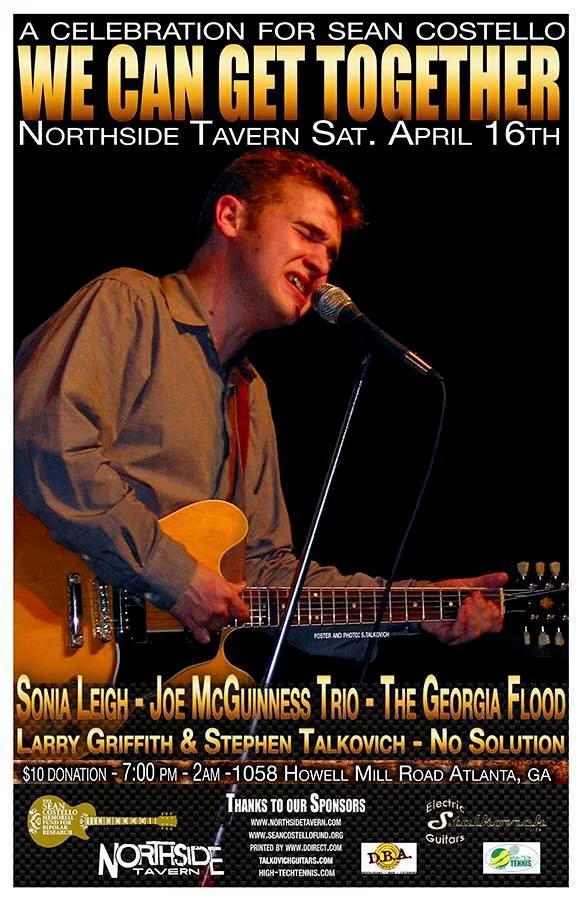
The ravaged intensity lately introduced into his music was no less evident on the album he released in February, We Can Get Together. A spokesperson for Delta Groove Records was moved to say of their new signing: “As the world continues to experience the loss of so many originators of the art form, you can rest assured that the future of the blues is in capable hands.”
Costello had many admirers who would have confidently backed the publicist’s words, hardly expecting the testimonial to turn so abruptly into a memorial.
He is survived by his parents, stepfather, sister and step-sisters.
Sean Costello, blues musician, born April 16 1979; died April 15 2008
11th
“Sorry” just doesn’t cut it when things like this happen. But, I am. So truly sorry for your loss. Hold on to those memories of good times. I’m glad you had them with him. He seems like he was a wonderful young man. Our loss of Sean the “performer” is but a drop in the bucket compared with your loss of him as a son.
Working in the mental health field, I see folks struggle all the time to maintain some kind of even playing field. And, even though I understand the science of it all, I still don’t “understand” why the cards get dealt the way they do sometimes. I guess the trick is to strive to figure out the best way to play the hand we’re holding each day.
While I personally don’t suffer from bipolar disorder, I do know that it is one of the more difficult conditions to treat and that much work still needs to be done in order to find something to help with the symptoms effectively and consistently.
Personally, I have had to deal with addiction and depression, which have both had their moments on top, believe me. When we discover that self-medicating isn’t really working for us, and then we turn to the medical community only to realize that their answers are less than perfect also – we can find ourselves even more frustrated and discouraged.
However, I know that the advances that have been made in recent years in the treatment of neuro-chemical disorders such as addiction, schizophrenia, depression, anxiety and bipolar have been phenomenal, especially considering the treatments of the past. Often times some of these as co-occuring. And, it is important to understand – these are dysfunctions of the brain itself. These aren’t weaknesses or failings of the persons who have them. They are BRAIN DISORDERS. And, like other diseases, some folks have far more severe symptoms than others.
Much work still needs to be done in the diagnosis and treatment of these brain disorders. This is why foundations such as the Sean Costello Memorial Fund for Bipolar Research are so important. The more we can learn about these disorders, the better the treatments and interventions will be for them.
One statement that I have found is universally shared by all of those dealing with these types of issues is: “Sometimes I feel the most alone when I am surrounded by a crowd.” Many of us can relate to this.
For anyone who is interested in learning more about Bipolar Disorder, please see the National Institute of Mental Health’s information at:
http://www.nimh.nih.gov/health/publications/bipolar-disorder/complete-publication shtml
I applaud you for coming forward and out of the shadows about this. It is only through more openness and public education and awareness that those dealing with these disorders and their loved ones will feel comfortable in sharing with others what is going on with them and in getting the support they need. I pray that you all find love and support as you deal with Sean’s death and in spreading the word through the foundation. Thank you for sharing all of this with us.
As a fan, I know I’ll be forever grateful for the breath of fresh air he breathed into the blues.
Peace ~ Molly PELLETTIERE, Kansas City
05th
Sean’s music has sustained me for many years. I knew him when he was still playing Jimmy Hendrix and Axl Rose. I cannot bear to hear him sing now. It just makes the tears come harder and faster, and yet, I cannot bear to be without his voice. Sean was the most precious, kind, generous, gifted soul on the eartn. His laugh was so contagious that you would come from another room just to share in it. His humor could be silly or witty depending on the person and his mood. There wasn’t a day that his guitar wasn’t with him, and hardly a day that I didn’t talk to him. There never was a time that music wasn’t in his head or soul. I hope that any speculation between Sean’s passing and the memorial fund will dissipate, and people will realize that Sean was a person. A loving, caring, complicated, humble genius of a person who had to perform and sing and play, and yet was petrified every time he did. Rarely, was it good enough, and yet, to us, the audience is was always superb. No one would ever guess what it took for Sean to get on stage and mesmeize us, and what your appreciation gave back to him It was one of his hardest challenges and his sustenance.
I cannot understand why he is no longer here. I know he wasn’t finished with his music and I wan’t finished loving him. Most of all, I know he didn’t want to go. If just one person can be spared the premature separation from someone they loved because of his foundation, there will be some purpose in an otherwise unacceptable event. I hope you can listen to his music and share it with everyone you know. It is exceptional as Sean, the son, brother, friend and musician was.
Thank you all for all of your kindnesses and sweet words and generous contibutions. Right now, they are a substitution for his voice which I cannot bear to live without.
Sean’s Mom
03rd

Photo © 2007 RBKRecords
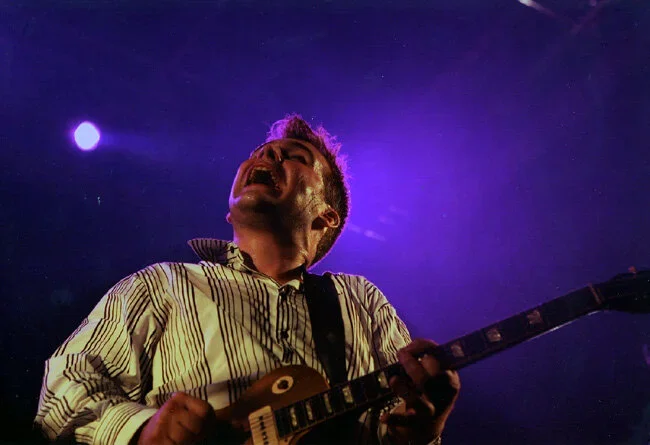
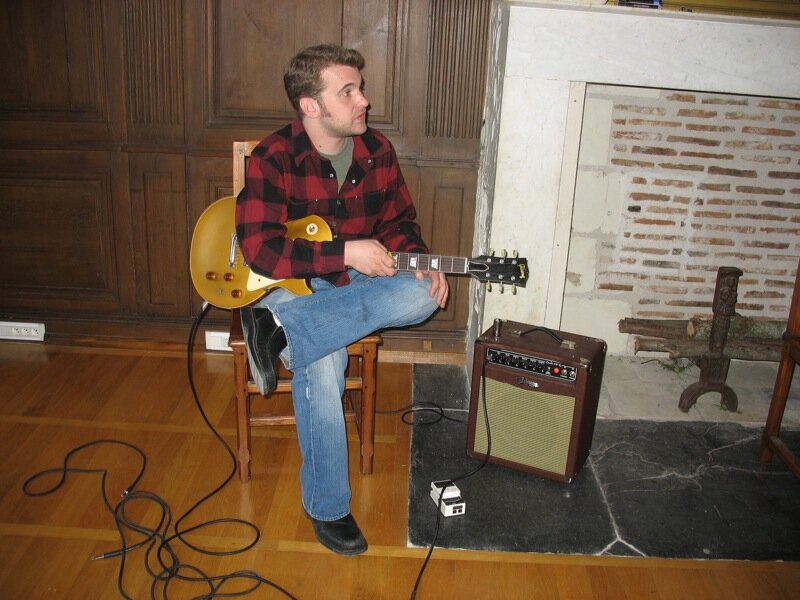
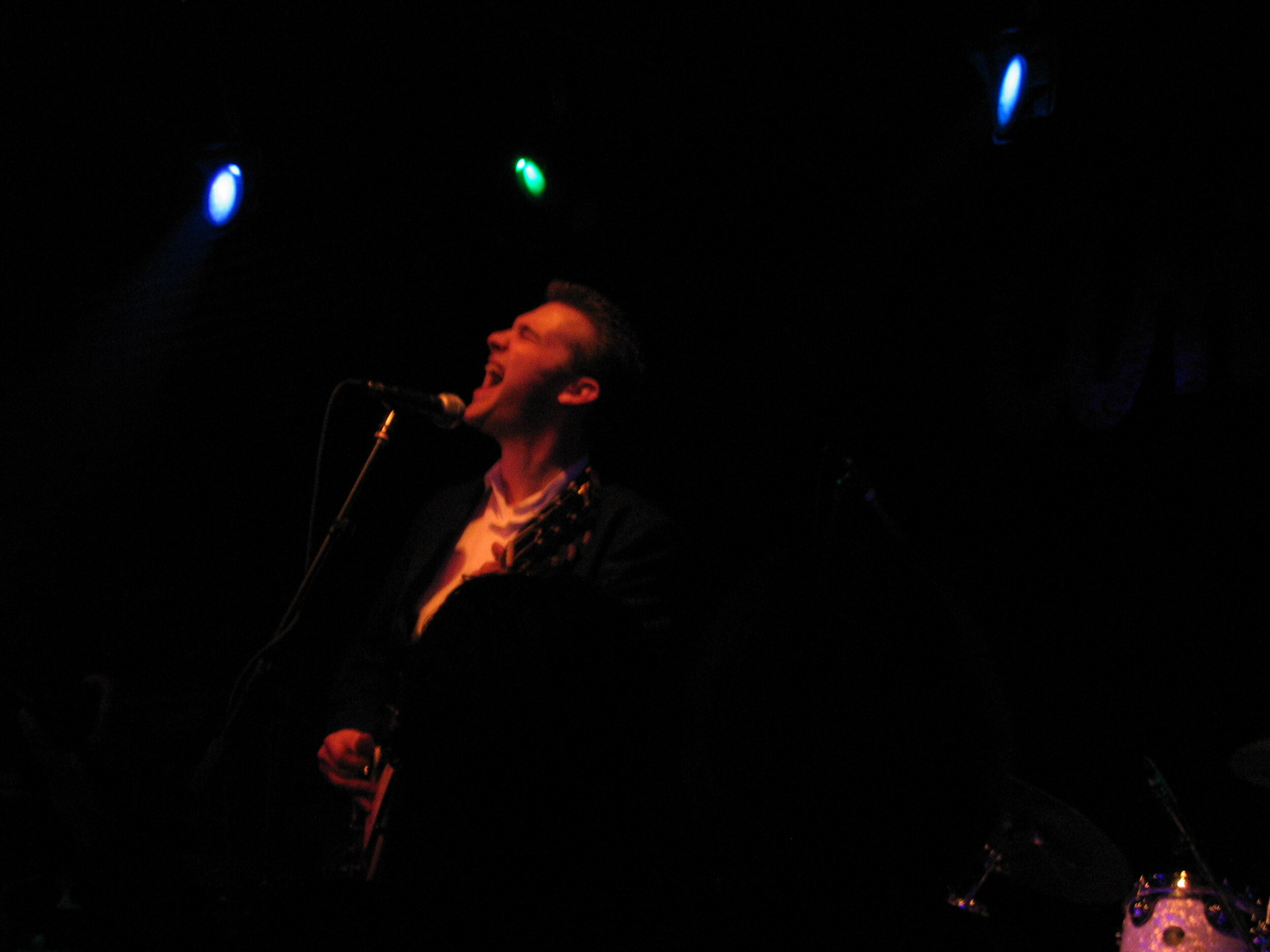
Over the last dozen years, Sean Costello has become one of the most exciting singer-songwriters and guitarists on the blues scene, putting a deeply personal imprint on classic soul, blues, and roots rock sounds. With his gold top Les Paul itself an iconic link to postwar blues heroes like Muddy Waters and Guitar Slim, and the signatures it bears – from Jody Williams and Robert Lockwood Jr., two of the preeminent stylists of electric blues – direct evidence of the passing of the torch, Sean Costello is unshakably grounded in tradition, even as he brings the music into the future, just as his soul heroes of the 1960s and 1970s did.
Born in 1979 in Philadelphia, Costello began playing guitar at age nine, about the time his family moved to Atlanta. He came of age early, appearing regularly in clubs before he could drive, much less gain legal admission, to them. At age 14, his winning performance in the finals of the Memphis Blues Society’s talent competition had career-changing effects. First, it netted him studio time to record his debut album, Call The Cops, a collection of 1940s and 1950s-style Chicago blues. The Memphis trip also marked the beginning of an important association with another finalist, as Costello put his solo aspirations on hold long enough to contribute indelibly memorable guitar tracks to Susan Tedeschi’s career breakthrough gold album, Just Won’t Burn and, with his band, to back her on the high-profile national tour in support of that record.
Although Cops was well-received (Real Blues deemed it “explosive”), Costello went hard to the woodshed before his next recording, Cuttin’ In (2000). The results were immediately apparent in a more mature, fully realized vocal delivery, and in a broader range of material that touched on Texas influences (Johnny “Guitar” Watson), darkly exotic Caribbean sounds (“Goombay Rock”, a track discovered by accident), and second-generation postwar Chicago artists (the worldly, tour-de-force cover of “Double Trouble” marks Costello’s first attempt at recording a song by Otis Rush, who continues as a wellspring of inspiration).
The release of Moanin’ For Molasses in 2002 included increasingly confident originals in the Chicago and New Orleans traditions, and reasserted Costello’s established strengths with powerful interpretations of material originally recorded by Jimmy Rogers, Buddy Guy, Jody Williams, J.B. Lenoir, with two songs from the Otis Rush canon. The inclusion of James Brown’s intense 1959 ballad “I Want You So Bad” and Johnnie Taylor’s slamming Stax side “You Can’t Win With A Losing Hand” pointed to a growing interest in soul music first evidenced in live performances of songs by Tyrone Davis and Clarence Carter, and marked an ongoing evolution as interpreter and artist that would come to fruition on Costello’s next project.
2005′s inspiredSean Costello ventured further into vintage funk and soul sounds, including gems from Johnnie Taylor, Robert Ward, Johnny “Guitar” Watson, and Al Green, and the superb, genre-approved originals “She Changed My Mind” and “No Half Steppin’”. His longtime interest in Bob Dylan shone through in a very personal reading of “Simple Twist of Fate” and in his own “Father”, which sounds like a lost outtake from the Desire sessions. Costello’s affecting delivery on the gorgeous ballads “All I Can Do” and “Don’t Pass Me By” proved him to be among our premier singers of torch songs and standards while revealing new aspects of his songcraft. Tommy Johnson’s “Big Road Blues” and the original “I’ve Got To Ride” looked back to the blues roots underpinning all Costello’s work.
Costello cites four individuals as having directly affected his development as artist and performer. Early direction came from Texas-born guitarist Felix Reyes, whose Cats have provided fertile onstage proving grounds for generations of younger bluesmen in Dallas, Austin, Atlanta, Florida, and now Chicago. “He was a great teacher to me. I still think about the way he plays. He’s the guy that taught me to listen, not to play so many notes, and chill out, and don’t do everything you know all at once. He’s a really good player, a good friend to me.” Costello calls his apprenticeship with Ronnie Earl, conducted over several National Guitar Workshops, “a huge, huge influence” in developing a soulful, personal voice on his instrument. Later, Americana music icon Levon Helm made a tremendous impression on Costello, who gained valuable perspective on performing and life while working with him. Most recently, drummer Donnie McCormick, a veteran of the storied ’70s rock and soul rhythm section The Dixie Flyers and longtime fixture on the Atlanta music scene, has acted as Costello’s mentor. “He’s a great singer-songwriter and performer. I’ve been soaking up his vocal style, which is unique, and learning about songwriting through him.”
Along the way, Costello has had the opportunity to brush elbows with musical legends. He has shared bandstands with the likes of B.B. King, Buddy Guy, Hubert Sumlin, Elvis Costello, Dr. John, Kim Wilson, Johnnie Johnson, Pinetop Perkins, Luther Allison, Anson Funderburgh and Sam Myers, Lynwood Slim, Steve Jordan, Willie Weeks, and Jimmy Vivino . In addition to Susan Tedeschi, he has recorded with Helm, Jody Williams and Tinsley Ellis, and his band was hand-picked to record backing tracks for gospel greats The Five Blind Boys. Most recently, Costello received acclaim as the primary guitarist on Long Time Coming, the Blues Music Award-nominated comeback album by blues shouter Nappy Brown.
Not content to remain at rest, Costello’s growth never sacrifices the feeling he values. As he says, “Whatever I do is going to be very rooted in blues or rhythm and blues. Everthing that I play is just jumping off from that point.” Just as soul and rock grew from the blues, fresh sounds enter Costello’s repertoire as a natural development of his listening habits. A musical discussion with Costello is as likely to touch on Otis Clay, O. V. Wright, Eddie Hinton, Otis Redding, Bobby Womack, and Johnnie Taylor (his all-time favorite singer) as Otis Rush, Robert Lockwood Jr., Freddy King, Bobby “Blue” Bland, Jimmie Vaughan, or Lurrie Bell (his favorite contemporary guitarist), with Bob Dylan’s work never far from the forefront. Heavy sessions listening to rock ‘n’ roll – which, for Costello, means Chuck Berry, Fats Domino, and Jerry Lee Lewis – played a part in developing the sound of his newest recordings.
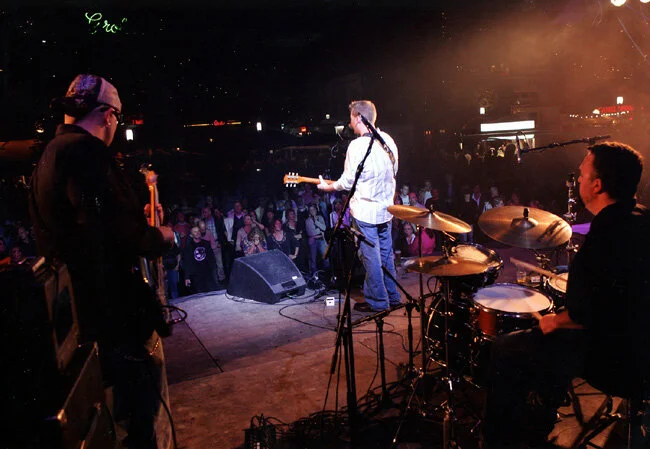
Forgoing the comfort of his long-time band (a full complement that featured organ and harmonica or piano), Costello has for the past two years been playing in a trio format with Aaron Trubic (electric bass) and, most recently, Paul Campanella Jr. (drums), a rhythm section of deadly precision and efficiency. The stripped-down configuration not only forces Costello to work harder – “I am playing a lot of guitar, man!” – it lends sharp focus and an aggressive edge to the music, a set of raw blues (“Anytime You Want”), impassioned gospel (“Going Home”), solid soul (“Can’t Let Go”), idiosyncratic pop (“You Told Me A Lie” filters The Beatles through the Chess studio), exposed-nerve ballads (McCormick’s “Have You No Shame” is one highlight) that crackles with energy and a deep groove.